

Article Sidebar
Downloads
Main Article Content
Abstract
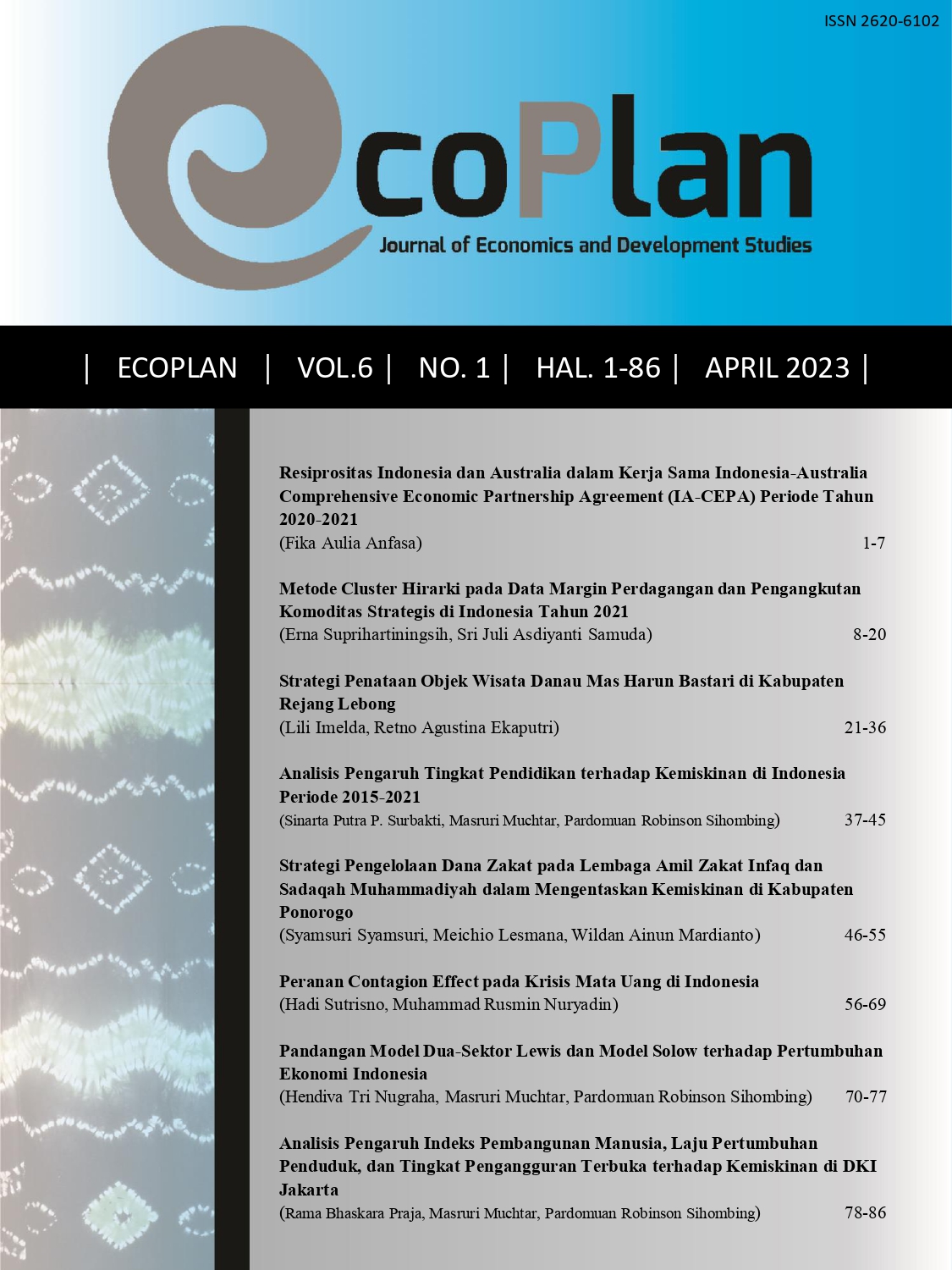
This research was conducted in the period 1991(1)-2021(12), aiming to look at the contagion effect of the currency crisis in Indonesia. They were leading macroeconomic indicators as indicators/signals of impending or non-occurring problems. Determination of the currency crisis period based on EMPI (Exchange Market Pressure Index) by setting a threshold (threshold) at a specific value. Two models are used in this research: the Herrera-Garcia model and the Signal Analysis Model. The Herrera-Garcia model is based on the Composite Index generated from the Leading Indicator in detecting signals of impending crises by considering efficiency. The Signal Analysis model is used to analyze the impact of the contagion effect on currency crises, relying more on its accuracy than the Herrera-Garcia model. The results showed that the currency crisis that occurred in countries in the region impacted the currency crisis in Indonesia, where the crisis from one country had a Contagion Effect that differed in contribution from other countries.
Article Details
References
- Abiad, A. (2003). Early Warning System: A survey and Regime- Switching Aproach (Vol. 03, Nomor 02).
- Adiningsih, Sri, & Dini, N. . (2003). Macroeconomic Vulnerability in Indonesia. In Thailand Development Research Institute.
- Arias, G., & Erlandsson, U. (2004). Regime switching as an alternative early warning system of currency crises-an application to South-East Asia. Working paper.
- Aziz, J., Caramazza, F. dan Salgado, R. (2000). Currency crises: In search of common element. IMF working paper,.
- Blaszkiewicz, M. (2000). What Factors Led to the Asian Financial Crisis: Were or Were not Asian Economics Sound? CASE Network Studies and Analyses, 209.
- Boonman, T.M, Jacobs, J, dan Kuper, G. (2019). Early Warning System for Currency Crises with Real-Time Data. Open Economies Review, Vol 30, 813-835.
- Bordo, M., Eichengreen, B., Klingebiel, D., & Martinez‐Peria, M. S. (2001). Is the crisis problem growing more severe? Economic policy, 16(32), 52–82.
- Box, Jenkins, G. (1976). Time Series Analysis, Forecasting and Control.
- Cipollini A. dan Capetanios, G. (2008). Forecasting Financial Crises and Contagion in Asia using Dynamic Factor Analysis. Center for Economic Research Series of Working Paper, 200(No.014).
- Corsetti, G., Pesenti, P. and Roubini, N. (1999). What Caused the Asian Currency and Financial Crisis? Japan and the World Economy, 305-373.
- Eichengreen, B., Rose, A. K., & Wyplosz, C. (1995). Exchange market mayhem: the antecedents and aftermath of speculative attacks. Economic policy, 10(21), 249–312.
- Feridun, M. (2009). Determinants of exchange market pressure in Turkey: An econometric investigation. Emerging Markets Finance and Trade, 45(2), 65–81.
- Frankel, J. A., & Rose, A. K. (1996). Currency crashes in emerging markets: An empirical treatment. Journal of international Economics, 41(3–4), 351–366.
- Frankel, J., & Saravelos, G. (2012). Can leading indicators assess country vulnerability? Evidence from the 2008–09 global financial crisis. Journal of International Economics, 87(2), 216–231.
- Girton, L. dan R., & Oper, D. (1977). Measuring Exchange Market Pressure and Intervention in Interdependent Economies: A Two-Country Model. The American Economic Review, vol 67(No.4), 537-548.
- Goldstein, M., Kaminsky, G. L., & Reinhart, C. M. (2000). Assessing financial vulnerability: an early warning system for emerging markets. Peterson Institute.
- Herrera, S., & Garcia, C. (1999). User’s guide to an early warning system for macroeconomic vulnerability in Latin American countries (Vol. 2233). World Bank Publications.
- Jacobs, J. P. A. M., & Kuper, G. H. (2003). Indicators of financial crises do work! An early-warning system for six Asian countries.
- Kaminsky, G. L. (1999). Currency and banking crises: the early warnings of distress. International Monetary Fund.
- Kaminsky, G. L., & Reinhart, C. M. (1999). The twin crises: the causes of banking and balance-of-payments problems. American economic review, 89(3), 473–500.
- Kaminsky, G., Lizondo, S., & Reinhart, C. M. (1998). Leading indicators of currency crises. Staff Papers, 45(1), 1–48.
- Knedlik, T. (2006). Estimating monetary policy rules for South Africa. South African Journal of Economics, 74(4), 629–641.
- Moreno, R. (1999). Did a boom in money and credit precede east Asia’s recent currency crisis? Economic Review-Federal Reserve Bank of San Francisco, 23–41.
- Sachs, J. D., Tornell, A., & Velasco, A. (1996). Financial crises in emerging markets: the lessons from 1995. National bureau of economic research Cambridge, Mass., USA.
- Salvator, D. (1997). Ekonomi Internasional (Edisi Keli). Erlangga.
- Sutrisno, H., Sari, D. W., & Handoyo, R. D. (2021). Vulnerability Analysis of Macroeconomic Indicators for Early Detection of Currency Crisis: Case Study of Indonesian Economy on 1991–2019. Journal of International Commerce, Economics and Policy, 12(02), 2150006.
- Sutrisno, H., Wulansari, D., & Handoyo, R. D. (2022). Macroeconomic Indicators as A Signal of The Currency Crisis in The Indonesian Economy. International Journal of Economics & Management, 16(1).
- Tjahjono, E. D. (1998). Fundamental Ekonomi, Contagion Effect Dan Krisis Asia. Buletin Ekonomi Moneter dan Perbankan, 1(2), 1–27.
References
Abiad, A. (2003). Early Warning System: A survey and Regime- Switching Aproach (Vol. 03, Nomor 02).
Adiningsih, Sri, & Dini, N. . (2003). Macroeconomic Vulnerability in Indonesia. In Thailand Development Research Institute.
Arias, G., & Erlandsson, U. (2004). Regime switching as an alternative early warning system of currency crises-an application to South-East Asia. Working paper.
Aziz, J., Caramazza, F. dan Salgado, R. (2000). Currency crises: In search of common element. IMF working paper,.
Blaszkiewicz, M. (2000). What Factors Led to the Asian Financial Crisis: Were or Were not Asian Economics Sound? CASE Network Studies and Analyses, 209.
Boonman, T.M, Jacobs, J, dan Kuper, G. (2019). Early Warning System for Currency Crises with Real-Time Data. Open Economies Review, Vol 30, 813-835.
Bordo, M., Eichengreen, B., Klingebiel, D., & Martinez‐Peria, M. S. (2001). Is the crisis problem growing more severe? Economic policy, 16(32), 52–82.
Box, Jenkins, G. (1976). Time Series Analysis, Forecasting and Control.
Cipollini A. dan Capetanios, G. (2008). Forecasting Financial Crises and Contagion in Asia using Dynamic Factor Analysis. Center for Economic Research Series of Working Paper, 200(No.014).
Corsetti, G., Pesenti, P. and Roubini, N. (1999). What Caused the Asian Currency and Financial Crisis? Japan and the World Economy, 305-373.
Eichengreen, B., Rose, A. K., & Wyplosz, C. (1995). Exchange market mayhem: the antecedents and aftermath of speculative attacks. Economic policy, 10(21), 249–312.
Feridun, M. (2009). Determinants of exchange market pressure in Turkey: An econometric investigation. Emerging Markets Finance and Trade, 45(2), 65–81.
Frankel, J. A., & Rose, A. K. (1996). Currency crashes in emerging markets: An empirical treatment. Journal of international Economics, 41(3–4), 351–366.
Frankel, J., & Saravelos, G. (2012). Can leading indicators assess country vulnerability? Evidence from the 2008–09 global financial crisis. Journal of International Economics, 87(2), 216–231.
Girton, L. dan R., & Oper, D. (1977). Measuring Exchange Market Pressure and Intervention in Interdependent Economies: A Two-Country Model. The American Economic Review, vol 67(No.4), 537-548.
Goldstein, M., Kaminsky, G. L., & Reinhart, C. M. (2000). Assessing financial vulnerability: an early warning system for emerging markets. Peterson Institute.
Herrera, S., & Garcia, C. (1999). User’s guide to an early warning system for macroeconomic vulnerability in Latin American countries (Vol. 2233). World Bank Publications.
Jacobs, J. P. A. M., & Kuper, G. H. (2003). Indicators of financial crises do work! An early-warning system for six Asian countries.
Kaminsky, G. L. (1999). Currency and banking crises: the early warnings of distress. International Monetary Fund.
Kaminsky, G. L., & Reinhart, C. M. (1999). The twin crises: the causes of banking and balance-of-payments problems. American economic review, 89(3), 473–500.
Kaminsky, G., Lizondo, S., & Reinhart, C. M. (1998). Leading indicators of currency crises. Staff Papers, 45(1), 1–48.
Knedlik, T. (2006). Estimating monetary policy rules for South Africa. South African Journal of Economics, 74(4), 629–641.
Moreno, R. (1999). Did a boom in money and credit precede east Asia’s recent currency crisis? Economic Review-Federal Reserve Bank of San Francisco, 23–41.
Sachs, J. D., Tornell, A., & Velasco, A. (1996). Financial crises in emerging markets: the lessons from 1995. National bureau of economic research Cambridge, Mass., USA.
Salvator, D. (1997). Ekonomi Internasional (Edisi Keli). Erlangga.
Sutrisno, H., Sari, D. W., & Handoyo, R. D. (2021). Vulnerability Analysis of Macroeconomic Indicators for Early Detection of Currency Crisis: Case Study of Indonesian Economy on 1991–2019. Journal of International Commerce, Economics and Policy, 12(02), 2150006.
Sutrisno, H., Wulansari, D., & Handoyo, R. D. (2022). Macroeconomic Indicators as A Signal of The Currency Crisis in The Indonesian Economy. International Journal of Economics & Management, 16(1).
Tjahjono, E. D. (1998). Fundamental Ekonomi, Contagion Effect Dan Krisis Asia. Buletin Ekonomi Moneter dan Perbankan, 1(2), 1–27.