

Article Sidebar
Downloads
Main Article Content
Abstract
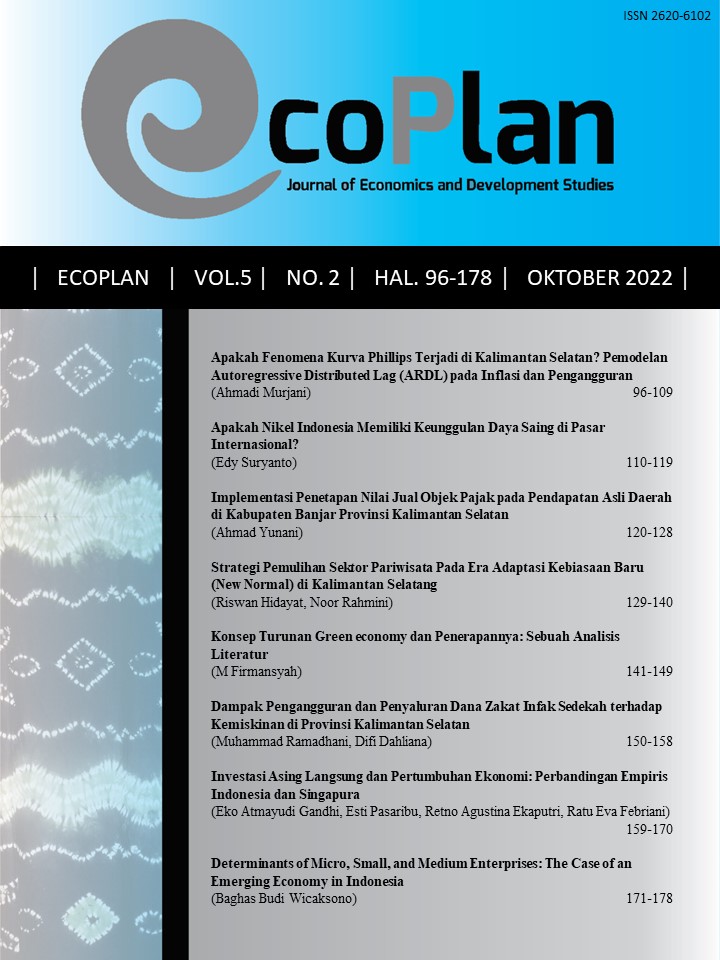
The covid-19 pandemic has worsened Indonesia’s economic situation. Most households have tried to survive by running their own business because they have just been fired from their latest company. Unfortunately, this business cycle forced families to reduce production costs due to less aggregate product demand. Many of them collapsed, and fewer survived. The condition of natural selection is to make government create a proper policy to prevent bad things happen in the future since MSME is categorized as an informal sector with many forms, such as culinary, services, and education. Most empirical studies show that the informal sector contributes more than 60% to Indonesia economic outcome. The aggregate demand for MSME products is only consumed by 20% of below-income group households. This study aims to analyse the effect of input factor on MSME productivity, proving that labour and capital investment is determinants for the extreme resilience of MSME in Indonesia. It used secondary data from 2016 to 2020 about the MSME sector in Indonesia and the Ministry of Cooperation using a proxy of MSME productivity and the MSME export ratio of total exports of all economic sectors. This research was then analyzed using the Linear Regression with Ordinary Least squares with STATA 14. The results showed that the labour and capital investment in the MSME sector had a positive and significant effect on the productivity and export ratio of MSMEs. T-statistics and F-statistics indicate both are higher than T and F table (p-value < 0,05). The regression model also does not suffer from classical assumption tests such as heteroskedasticity, multicollinearity, and autocorrelation.
Keywords
Article Details
References
- Dias, L. C. P., Pimenta, F. M., Santos, A. B., Costa, M. H., & Ladle, R. J. (2016). Patterns of land use, extensification, and intensification of Brazilian agriculture. In Global change biology (Vol. 22, Issue 8, pp. 2887–2903). Blackwell Publishing Ltd. https://doi.org/10.1111/gcb.13314
- Ekonomi, J. R., Bisnis, D., Ariwibowo, P., Bakti, ) ;, Endaryono, T., & Artikel, S. (2021). The Purchase Power of The Community and Government Subsidies on MSME Production Performance in The COVID-19 Pandemic. http://journals.usm.ac.id/index.php/jreb
- Gade, S. (2022). MSMEs’ Role in Economic Growth-a Study on India’s Perspective. https://www.researchgate.net/publication/343189302
- Harahap, E. F., Luviana, L., & Huda, N. (2020). Tinjauan Defisit Fiskal, Ekspor, Impor dan Jumlah UMKM terhadap Pertumbuhan Ekonomi Indonesia. Jurnal Benefita, 5(2), 151. https://doi.org/10.22216/jbe.v5i2.4907
- Hu, B., & Mcaleer, M. (2005). Estimation of Chinese agricultural production efficiencies with panel data. 68, 475–484. https://doi.org/10.1016/j.matcom.2005.02.002
- Isbah, U., & Iyan, R. Y. (2016). Analisis Peran Sektor Dalam Perekonomian Dan Kesempatan Kerja Pertanian Di Provinsi Riau. Jurnal Sosial Ekonomi Pembangunan, 7(19), 45–54.
- PRASETYO, P. E. (2020). The Role of Government Expenditure and Investment for MSME Growth: Empirical Study in Indonesia. Journal of Asian Finance, Economics and Business, 7(10), 471–480. https://doi.org/10.13106/jafeb.2020.vol7.no10.471
- Prio Haryanto, T., Ekonomi Pembangunan, J., Ekonomi, F., & Negeri Semarang, U. (2013). EDAJ 2 (3) (2013) Economics Development Analysis Journal Dipublikasikan Agustus 2013. http://journal.unnes.ac.id/sju/index.php/edaj
- Rahma Rina Wijayanti, dan. (2020). Strategi Pemberdayaan UMKM Menghadapi Pasar Bebas Asean.
- Saarce, Y., Lantu, M., Koleangan, R. A. M., & Rotinsulu, T. O. (2011). Pengaruh Belanja Pemerintah Terhadap Pertumbuhan Ekonomi dan Pengentasan Kemiskinan di Kota Bitung.
- Sahoo, P., & Ashwani. (2020). COVID-19 and Indian Economy: Impact on Growth, Manufacturing, Trade and MSME Sector. Global Business Review, 21(5), 1159–1183. https://doi.org/10.1177/0972150920945687
- Salim, M. N., Susilastuti, D., & Astuty, P. (2021). Determinants of Indonesian MSME Exports and Their Performance during the Covid-19 Pandemic. Journal of Economics and Business, 4(3). https://doi.org/10.31014/aior.1992.04.03.379
- Simba, A., & Thai, M. T. T. (2019). Advancing Entrepreneurial Leadership as a Practice in MSME Management and Development. Journal of Small Business Management, 57(S2), 397–416. https://doi.org/10.1111/jsbm.12481
- Todaro. (2006). No Title.
- Triharjanto, D., Ratnasih, C., & Yolanda, Y. (2022, February 9). The Government’s Strategy to Promote the Export of MSME Products during the Covid-19 Pandemic. https://doi.org/10.4108/eai.30-10-2021.2315822
- Wanodyatama Islami, N., Supanto, F., Soeroyo, A., Penelitian, B., Daerah, P., Malang, K., Panji, J., & 158 Kepanjen, N. (2021). Peran Pemerintah Daerah dalam Mengembangkan UMKM yang Terdampak COVID-19. http://ejurnal.malangkab.go.id/index.php/kr
- Widianingsih, W., Suryantini, A., Sosial, J., Pertanian, E., & Pertanian, F. (2015). Contribution of Agricultural Sector to Economic Growth in West Java Province (Vol. 26, Issue 2).
References
Dias, L. C. P., Pimenta, F. M., Santos, A. B., Costa, M. H., & Ladle, R. J. (2016). Patterns of land use, extensification, and intensification of Brazilian agriculture. In Global change biology (Vol. 22, Issue 8, pp. 2887–2903). Blackwell Publishing Ltd. https://doi.org/10.1111/gcb.13314
Ekonomi, J. R., Bisnis, D., Ariwibowo, P., Bakti, ) ;, Endaryono, T., & Artikel, S. (2021). The Purchase Power of The Community and Government Subsidies on MSME Production Performance in The COVID-19 Pandemic. http://journals.usm.ac.id/index.php/jreb
Gade, S. (2022). MSMEs’ Role in Economic Growth-a Study on India’s Perspective. https://www.researchgate.net/publication/343189302
Harahap, E. F., Luviana, L., & Huda, N. (2020). Tinjauan Defisit Fiskal, Ekspor, Impor dan Jumlah UMKM terhadap Pertumbuhan Ekonomi Indonesia. Jurnal Benefita, 5(2), 151. https://doi.org/10.22216/jbe.v5i2.4907
Hu, B., & Mcaleer, M. (2005). Estimation of Chinese agricultural production efficiencies with panel data. 68, 475–484. https://doi.org/10.1016/j.matcom.2005.02.002
Isbah, U., & Iyan, R. Y. (2016). Analisis Peran Sektor Dalam Perekonomian Dan Kesempatan Kerja Pertanian Di Provinsi Riau. Jurnal Sosial Ekonomi Pembangunan, 7(19), 45–54.
PRASETYO, P. E. (2020). The Role of Government Expenditure and Investment for MSME Growth: Empirical Study in Indonesia. Journal of Asian Finance, Economics and Business, 7(10), 471–480. https://doi.org/10.13106/jafeb.2020.vol7.no10.471
Prio Haryanto, T., Ekonomi Pembangunan, J., Ekonomi, F., & Negeri Semarang, U. (2013). EDAJ 2 (3) (2013) Economics Development Analysis Journal Dipublikasikan Agustus 2013. http://journal.unnes.ac.id/sju/index.php/edaj
Rahma Rina Wijayanti, dan. (2020). Strategi Pemberdayaan UMKM Menghadapi Pasar Bebas Asean.
Saarce, Y., Lantu, M., Koleangan, R. A. M., & Rotinsulu, T. O. (2011). Pengaruh Belanja Pemerintah Terhadap Pertumbuhan Ekonomi dan Pengentasan Kemiskinan di Kota Bitung.
Sahoo, P., & Ashwani. (2020). COVID-19 and Indian Economy: Impact on Growth, Manufacturing, Trade and MSME Sector. Global Business Review, 21(5), 1159–1183. https://doi.org/10.1177/0972150920945687
Salim, M. N., Susilastuti, D., & Astuty, P. (2021). Determinants of Indonesian MSME Exports and Their Performance during the Covid-19 Pandemic. Journal of Economics and Business, 4(3). https://doi.org/10.31014/aior.1992.04.03.379
Simba, A., & Thai, M. T. T. (2019). Advancing Entrepreneurial Leadership as a Practice in MSME Management and Development. Journal of Small Business Management, 57(S2), 397–416. https://doi.org/10.1111/jsbm.12481
Todaro. (2006). No Title.
Triharjanto, D., Ratnasih, C., & Yolanda, Y. (2022, February 9). The Government’s Strategy to Promote the Export of MSME Products during the Covid-19 Pandemic. https://doi.org/10.4108/eai.30-10-2021.2315822
Wanodyatama Islami, N., Supanto, F., Soeroyo, A., Penelitian, B., Daerah, P., Malang, K., Panji, J., & 158 Kepanjen, N. (2021). Peran Pemerintah Daerah dalam Mengembangkan UMKM yang Terdampak COVID-19. http://ejurnal.malangkab.go.id/index.php/kr
Widianingsih, W., Suryantini, A., Sosial, J., Pertanian, E., & Pertanian, F. (2015). Contribution of Agricultural Sector to Economic Growth in West Java Province (Vol. 26, Issue 2).