

Article Sidebar
Downloads
Main Article Content
Abstract
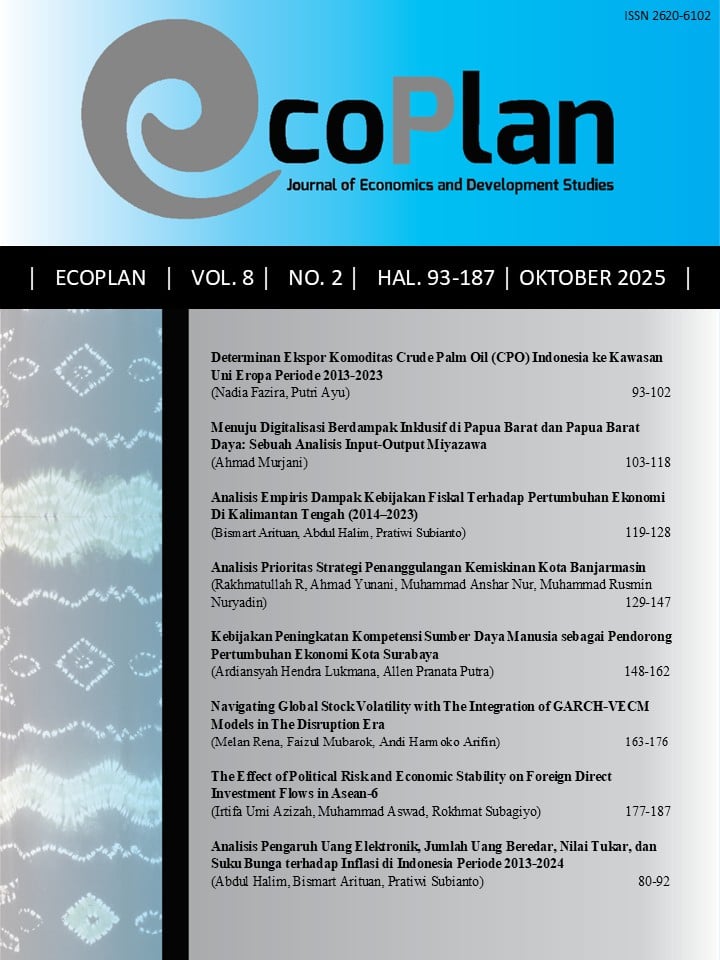
This study analyzes the influence of political risk and economic stability on Foreign Direct Investment (FDI) inflows in six ASEAN countries (Indonesia, Malaysia, Singapore, the Philippines, Thailand, and Vietnam) during the period 2013–2023. A quantitative approach with a panel data regression method was employed, where the dependent variable is FDI inflows (in million USD), while the independent variables consist of control of corruption as an indicator of political risk, and GDP and inflation as indicators of economic stability. Data were obtained from the World Bank, IMF, and Worldwide Governance Indicators (WGI). The regression model was selected based on the Chow and Hausman tests, and the analysis was conducted using EViews software. The results show that control of corruption has a positive and significant effect on FDI, emphasizing the importance of good governance and anti-corruption efforts in building investor confidence. GDP also has a positive and significant effect on FDI, reflecting the role of strong economic growth as a major attraction for foreign investors. Meanwhile, inflation has no significant effect on FDI, indicating that investors tend to prioritize factors such as policy stability, infrastructure quality, and institutional effectiveness over short-term price fluctuations. From a policy perspective, the findings suggest that ASEAN countries should strengthen governance quality and foster a transparent investment environment free from corruption to enhance foreign capital inflows. In addition, governments need to maintain macroeconomic stability through effective fiscal and monetary coordination while improving infrastructure and human capital development to attract sustainable long-term investments.
Keywords
Article Details

This work is licensed under a Creative Commons Attribution-ShareAlike 4.0 International License.
References
- Addainuri, M. I., Abidin, M., & Suci, L. E. (2023). Analisis Dampak Governance Terhadap Pertumbuhan Ekonomi di Negara Asean. Administratio: Jurnal Ilmiah Administrasi Publik Dan Pembangunan, 14(2), 155–172. https://doi.org/10.23960/administratio.v14i2.400
- Adi Ahdiat. (2024). Indonesia, Negara Tujuan Investasi Asing Nomor 2 di ASEAN. Databoks Katadata; Katadata.co.id. https://databoks.katadata.co.id/infografik/2024/07/25/indonesia-negara-tujuan-investasi-asing-nomor-2-di-asean
- Ahmad Ghazy Al Mubarok, Dinda Amalia Putri C, Nika Santika, & Citra Sukma Dewi Br Saragi. (2025). Analisis Faktor-Faktor yang Mempengaruhi Meningkatnya Pertumbuhan Ekonomi Singapura. Jurnal Ekonomi, Akuntansi, Dan Perpajakan, 2(1), 173–192. https://doi.org/10.61132/jeap.v2i1.825
- Anggraini, L. P., Ubaidillah, M., & Amah, N. (2024). Pengaruh Inflasi Dan Pertumbuhan Ekonomi Terhadap Foreign Direct Investment Di Negara Asean Periode 2019-2022. Seminar Inovasi Manajemen Bisnis Dan Akuntansi (SIMBA). https://doi.org/10.3138/9781442675391-007
- Ardina, M., & Rini Dwi Astuti. (2025). Analisis Pengaruh Indeks Persepsi Korupsi Dan Indikator Makroekonomi Terhadap Investasi Asing Langsung Di Negara-Negara Asean Tahun 2013-2022. Jurnal Ekonomi-Qu, 15(15), 1–12. https://doi.org/http://dx.doi.org/10.35448/jequ.
- Ariyadi, R., Yunani, A., & Sopiana, Y. (2024). Pengaruh Pertumbuhan Ekonomi, Suku Bunga, Inflasi, dan Perpajakan terhadap Investasi di Indonesia: Analisis Periode 2003-2022. Ecoplan, 7(2), 108–119. https://doi.org/10.20527/ecoplan.v7i2.686
- ASEAN. (2024). ASEAN Investment Report 2024 : ASEAN Economic Community 2025 and Foreign Direct Investment.
- Azizan, M., Simbolon, P. R., Barany, E., & Novianti, T. (2025). Faktor-faktor yang Mempengaruhi Investasi Asing Langsung di Indonesia. Ekonomikawan: Jurnal Ilmu Ekonomi Dan Studi Pembangunan, 25(1), 116–126. https://doi.org/10.30596/ekonomikawan.v25i1.22409
- Azzahra, F. A., Wardani, I., Nur, L., & Wulandari, R. (2023). Risiko Politik Dalam Dunia Bisnis. JMCBUS : Journal of Management and Creative Business, 1(3), 49–69.
- Deni, A., Yuliana, Purnamasari, L. M., Batubara, I., Fatmawati, E. R., Kaniawati, K., Nuhdi, A., & Alfalisyado. (2024). Manajemen Pemasaran Internasional. CV. Rey Medika Grafika.
- Dewi, P. K., & Triaryati, N. (2015). PengaDewi, P. K., & Triaryati, N. (2015). Pengaruh Pertumbuhan Ekonomi, Suku Bunga Dan Pajak Terhadap Investasi Asing Langsung. E-Jurnal Manajemen Universitas Udayana, 4(4), 866–878.ruh Pertumbuhan Ekonomi, Suku Bunga Dan Pajak Terhadap Investasi Asing La. E-Jurnal Manajemen Universitas Udayana, 4(4), 866–878.
- Elpisah. (2022). Pengantar Ekonomi Makro (Suarlin (ed.)). CV. Pena Persada.
- Fakultas Ekonomi dan Bisnis, U. M. A. (2024). Membangun Fondasi Kuat: Peran Stabilitas Ekonomi Makro dalam Pembangunan Indonesia.
- Globerman, S., & Shapiro, D. (2002). Global Foreign Direct Investment Flows: The Role of Governance Infrastructure. World Development, 30(11), 1899–1919.
- Inriama, M., & Setyowati, M. S. (2020). Pengaruh Pertumbuhan Ekonomi, Foreign Direct Investment dan Tax Rate Terhadap Penerimaan PPh Badan Negara ASEAN. Indonesian Treasury Review: Jurnal Perbendaharaan, Keuangan Negara Dan Kebijakan Publik, 5(4), 325–342. https://doi.org/10.33105/itrev.v5i4.240
- Kristianto, A., Zuhroh, I., Anindyntha, F. A., Studi, P., Pembangunan, E., & Malang, U. M. (2024). Pengaruh Fundamental Makroekonomi Terhadap Penanaman Modal Asing. 32(1), 23–32.
- Kurniasih, E. P. (2020). Perkembangan investasi asing di negara ASEAN. In Seminar Akademik Tahunan Ilmu Ekonomi Dan Studi Pembangunan. 362–370.
- Moridu, I., Putri, D. E., Posumah, N. H., Suciati, R., Nugraheni, S., Sudarmanto, E., & Rosyid, A. (2021). Manajemen Keuangan International. In Bandung. Widina Bhakti Persada Bandung.
- Mutiara, A., Siregar, I. S., Chairani, M., Nur, L. M., Afriyanti, Y., & Nadilla, T. (2024). Peran Kebijakan Fiskal Dalam Mendukung Stabilitas Ekonomi Makro. 2(7), 90.
- Perdana, M. A. A., & Setyadharma, A. (2022). Determinants of GDP Growth in Asean-5 Using Panel Method. Ecoplan, 5(1), 64–71. https://doi.org/10.20527/ecoplan.v5i1.434
- Prasetyo, E. N., Subagiyo, R., & Asiyah, B. N. (2024). Analisis Manajemen Risiko Pada Bank Syariah: Tinjauan Literatur. At Tujjar, 12(2), 918–930. https://doi.org/10.47467/reslaj.v4i4.1008
- Sabrina, F. D. A., & Soebagiyo, D. (2024). Pengaruh Inflasi, Nilai Tukar Dan Pdb Terhadap Penanaman Modal Asing Di Indonesia Tahun 1993-2022. NUSANTARA: Jurnal Ilmu Pengetahuan Sosial, 11(1), 343–348.
- Sahara, R. (2025). Determinan investasi asing langsung di kawasan ASEAN. Economics, Finance, and Business Review, 1(2), 83–96. https://doi.org/10.20885/efbr.vol1.iss2.art2
- Sartono, S., Winarni, E., Barika, Septriani, Purnamaningrum, T. K., Pracoyo, A., Kusumastuti, S. Y., Iswandiyah, R., & Hariyono. (2024). Buku Ajar Teori Ekonomi Makro (Efitra (ed.); Pertama). PT. Sonpedia Publishing Indonesia.
- Tiara Yesica Harwining Puspa, A., & Masykuroh, E. (2023). Pengaruh Pdrb, Inflasi Terhadap Penanaman Modal Asing Dan Upah Sebagai Variabel Intervening Di Indonesia 2017-2022. Investama : Jurnal Ekonomi Dan Bisnis, 8(1), 1–14. https://doi.org/10.56997/investamajurnalekonomidanbisnis.v8i1.953
- Wilantari, R. N., Priyanto, E., Zainuri, Annas, M., Rusminingsih, D., & Bawono, S. (2023). Dynamics of Corruption, Government Expenditures, Consumption and Taxes in Indonesia: Macroeconomic Model Simulation (Issue Tceeis). Atlantis Press International BV. https://doi.org/10.2991/978-94-6463-346-7_43
- World Bank, G. (n.d.). Metadata Glossary.
- Zakiyyah, N. A. A., Lubis, F. R. A., & Ainy, R. N. (2024). The Effect Of Macroeconomic, Institutional And Corruption Variables On FDI In Asean Countries. Journal of Economic, Bussines and Accounting (COSTING), 7(3), 5673–5685. https://doi.org/10.31539/costing.v7i3.9498
References
Addainuri, M. I., Abidin, M., & Suci, L. E. (2023). Analisis Dampak Governance Terhadap Pertumbuhan Ekonomi di Negara Asean. Administratio: Jurnal Ilmiah Administrasi Publik Dan Pembangunan, 14(2), 155–172. https://doi.org/10.23960/administratio.v14i2.400
Adi Ahdiat. (2024). Indonesia, Negara Tujuan Investasi Asing Nomor 2 di ASEAN. Databoks Katadata; Katadata.co.id. https://databoks.katadata.co.id/infografik/2024/07/25/indonesia-negara-tujuan-investasi-asing-nomor-2-di-asean
Ahmad Ghazy Al Mubarok, Dinda Amalia Putri C, Nika Santika, & Citra Sukma Dewi Br Saragi. (2025). Analisis Faktor-Faktor yang Mempengaruhi Meningkatnya Pertumbuhan Ekonomi Singapura. Jurnal Ekonomi, Akuntansi, Dan Perpajakan, 2(1), 173–192. https://doi.org/10.61132/jeap.v2i1.825
Anggraini, L. P., Ubaidillah, M., & Amah, N. (2024). Pengaruh Inflasi Dan Pertumbuhan Ekonomi Terhadap Foreign Direct Investment Di Negara Asean Periode 2019-2022. Seminar Inovasi Manajemen Bisnis Dan Akuntansi (SIMBA). https://doi.org/10.3138/9781442675391-007
Ardina, M., & Rini Dwi Astuti. (2025). Analisis Pengaruh Indeks Persepsi Korupsi Dan Indikator Makroekonomi Terhadap Investasi Asing Langsung Di Negara-Negara Asean Tahun 2013-2022. Jurnal Ekonomi-Qu, 15(15), 1–12. https://doi.org/http://dx.doi.org/10.35448/jequ.
Ariyadi, R., Yunani, A., & Sopiana, Y. (2024). Pengaruh Pertumbuhan Ekonomi, Suku Bunga, Inflasi, dan Perpajakan terhadap Investasi di Indonesia: Analisis Periode 2003-2022. Ecoplan, 7(2), 108–119. https://doi.org/10.20527/ecoplan.v7i2.686
ASEAN. (2024). ASEAN Investment Report 2024 : ASEAN Economic Community 2025 and Foreign Direct Investment.
Azizan, M., Simbolon, P. R., Barany, E., & Novianti, T. (2025). Faktor-faktor yang Mempengaruhi Investasi Asing Langsung di Indonesia. Ekonomikawan: Jurnal Ilmu Ekonomi Dan Studi Pembangunan, 25(1), 116–126. https://doi.org/10.30596/ekonomikawan.v25i1.22409
Azzahra, F. A., Wardani, I., Nur, L., & Wulandari, R. (2023). Risiko Politik Dalam Dunia Bisnis. JMCBUS : Journal of Management and Creative Business, 1(3), 49–69.
Deni, A., Yuliana, Purnamasari, L. M., Batubara, I., Fatmawati, E. R., Kaniawati, K., Nuhdi, A., & Alfalisyado. (2024). Manajemen Pemasaran Internasional. CV. Rey Medika Grafika.
Dewi, P. K., & Triaryati, N. (2015). PengaDewi, P. K., & Triaryati, N. (2015). Pengaruh Pertumbuhan Ekonomi, Suku Bunga Dan Pajak Terhadap Investasi Asing Langsung. E-Jurnal Manajemen Universitas Udayana, 4(4), 866–878.ruh Pertumbuhan Ekonomi, Suku Bunga Dan Pajak Terhadap Investasi Asing La. E-Jurnal Manajemen Universitas Udayana, 4(4), 866–878.
Elpisah. (2022). Pengantar Ekonomi Makro (Suarlin (ed.)). CV. Pena Persada.
Fakultas Ekonomi dan Bisnis, U. M. A. (2024). Membangun Fondasi Kuat: Peran Stabilitas Ekonomi Makro dalam Pembangunan Indonesia.
Globerman, S., & Shapiro, D. (2002). Global Foreign Direct Investment Flows: The Role of Governance Infrastructure. World Development, 30(11), 1899–1919.
Inriama, M., & Setyowati, M. S. (2020). Pengaruh Pertumbuhan Ekonomi, Foreign Direct Investment dan Tax Rate Terhadap Penerimaan PPh Badan Negara ASEAN. Indonesian Treasury Review: Jurnal Perbendaharaan, Keuangan Negara Dan Kebijakan Publik, 5(4), 325–342. https://doi.org/10.33105/itrev.v5i4.240
Kristianto, A., Zuhroh, I., Anindyntha, F. A., Studi, P., Pembangunan, E., & Malang, U. M. (2024). Pengaruh Fundamental Makroekonomi Terhadap Penanaman Modal Asing. 32(1), 23–32.
Kurniasih, E. P. (2020). Perkembangan investasi asing di negara ASEAN. In Seminar Akademik Tahunan Ilmu Ekonomi Dan Studi Pembangunan. 362–370.
Moridu, I., Putri, D. E., Posumah, N. H., Suciati, R., Nugraheni, S., Sudarmanto, E., & Rosyid, A. (2021). Manajemen Keuangan International. In Bandung. Widina Bhakti Persada Bandung.
Mutiara, A., Siregar, I. S., Chairani, M., Nur, L. M., Afriyanti, Y., & Nadilla, T. (2024). Peran Kebijakan Fiskal Dalam Mendukung Stabilitas Ekonomi Makro. 2(7), 90.
Perdana, M. A. A., & Setyadharma, A. (2022). Determinants of GDP Growth in Asean-5 Using Panel Method. Ecoplan, 5(1), 64–71. https://doi.org/10.20527/ecoplan.v5i1.434
Prasetyo, E. N., Subagiyo, R., & Asiyah, B. N. (2024). Analisis Manajemen Risiko Pada Bank Syariah: Tinjauan Literatur. At Tujjar, 12(2), 918–930. https://doi.org/10.47467/reslaj.v4i4.1008
Sabrina, F. D. A., & Soebagiyo, D. (2024). Pengaruh Inflasi, Nilai Tukar Dan Pdb Terhadap Penanaman Modal Asing Di Indonesia Tahun 1993-2022. NUSANTARA: Jurnal Ilmu Pengetahuan Sosial, 11(1), 343–348.
Sahara, R. (2025). Determinan investasi asing langsung di kawasan ASEAN. Economics, Finance, and Business Review, 1(2), 83–96. https://doi.org/10.20885/efbr.vol1.iss2.art2
Sartono, S., Winarni, E., Barika, Septriani, Purnamaningrum, T. K., Pracoyo, A., Kusumastuti, S. Y., Iswandiyah, R., & Hariyono. (2024). Buku Ajar Teori Ekonomi Makro (Efitra (ed.); Pertama). PT. Sonpedia Publishing Indonesia.
Tiara Yesica Harwining Puspa, A., & Masykuroh, E. (2023). Pengaruh Pdrb, Inflasi Terhadap Penanaman Modal Asing Dan Upah Sebagai Variabel Intervening Di Indonesia 2017-2022. Investama : Jurnal Ekonomi Dan Bisnis, 8(1), 1–14. https://doi.org/10.56997/investamajurnalekonomidanbisnis.v8i1.953
Wilantari, R. N., Priyanto, E., Zainuri, Annas, M., Rusminingsih, D., & Bawono, S. (2023). Dynamics of Corruption, Government Expenditures, Consumption and Taxes in Indonesia: Macroeconomic Model Simulation (Issue Tceeis). Atlantis Press International BV. https://doi.org/10.2991/978-94-6463-346-7_43
World Bank, G. (n.d.). Metadata Glossary.
Zakiyyah, N. A. A., Lubis, F. R. A., & Ainy, R. N. (2024). The Effect Of Macroeconomic, Institutional And Corruption Variables On FDI In Asean Countries. Journal of Economic, Bussines and Accounting (COSTING), 7(3), 5673–5685. https://doi.org/10.31539/costing.v7i3.9498